
Student CV for University Applications: Template and Tips
A clear one-page CV helps with university, scholarship and summer school applications. Here is what to include, how to word it and a template you can copy.
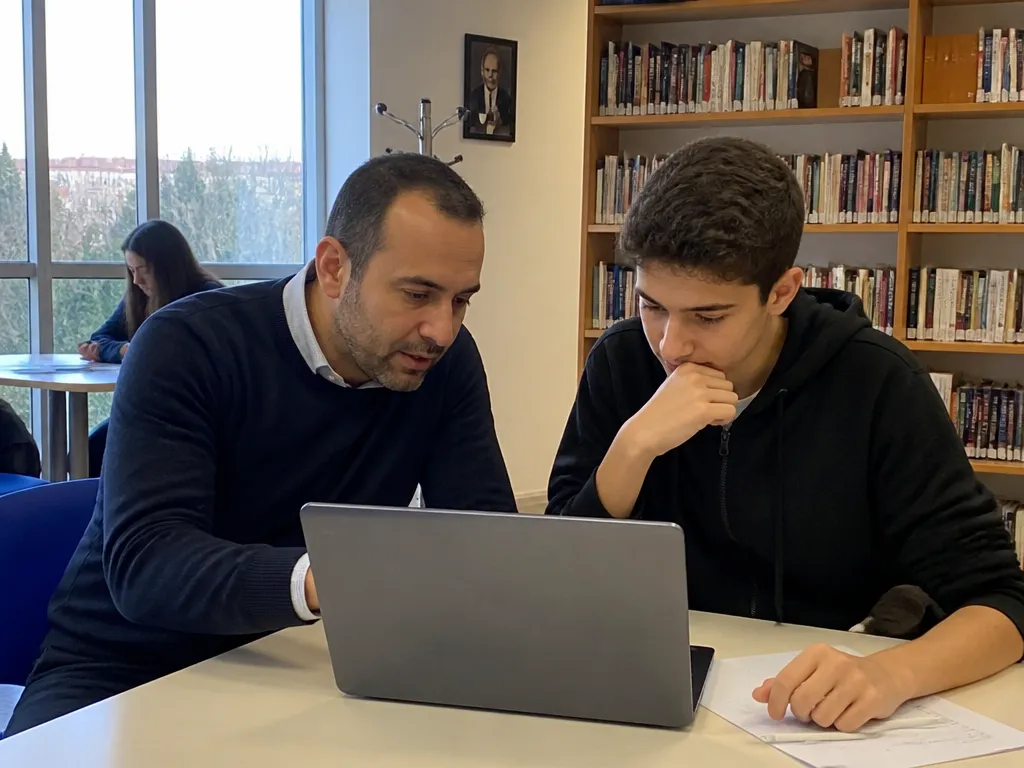
A student CV is a one-page summary of your education, activities, skills and achievements. Many universities abroad, scholarship programs and summer schools ask for one. Even when an application portal has its own forms, a ready CV also makes every form faster to fill in. However, most school leavers have never written a CV, so they either leave out their best experiences or fill the page with vague words. This guide shows you what to include, how to word each line and a one-page template to copy.
Why a student CV matters for university applications
A university does not meet you before it decides, so your documents speak for you. Your grades show how you learn, while a student CV shows what you do with your time. It also gives the teachers who write your recommendations a quick picture of you.
You may need a CV for:
- universities that ask for a CV, as many European universities do;
- scholarships and exchange programs;
- summer schools, internships and volunteering programs;
- interviews, because a printed copy helps the interviewer ask better questions.
What to put in a student CV
Keep the order simple, so that the reader finds each part in seconds. Most school leavers use these sections, from top to bottom.
Contact details
Write your full name as it appears in your passport, then your email, phone number and city. Use a simple, professional email address, for example your first name and surname. You do not need your full address, your ID number or your marital status. A photo depends on the country, so add one only when the application asks for it.
Education and test scores
List your current school first, with the curriculum (such as the IB or A levels), your expected graduation date and your grades or predicted grades. Next, add test scores such as IELTS, TOEFL or SAT, with the date of each test. If a subject connects to your chosen major, mention it here too.
Activities, projects and volunteering
This is where a student CV really stands out. Include clubs, sports, school projects, competitions, volunteering, part-time work and online courses. For each one, give your role, the dates and one or two lines on what you did. Our guide to extracurricular activities also explains which activities universities value most.
Skills and languages
List each language with a level, for example “Arabic: native, English: B2, Turkish: B1”. These levels, from A1 to C2, come from the Common European Framework of Reference for Languages (CEFR), and Europass uses them too. Then add digital or practical skills you can prove, such as video editing, coding or first aid.
Awards and certificates
Add prizes, honour rolls, certificates and places on selective programs, each with the year. Even a small local award counts, because it shows effort and commitment.
How to word each line
Admissions readers skim, so every line needs to be short and concrete. Start with an action verb, say what you did and, when you can, add a number or a result. For example:
- Weak: “Member of the science club.”
- Better: “Built a water-filter prototype with a team of four and presented it at the school science fair.”
- Weak: “Volunteering at a charity.”
- Better: “Packed food parcels every Saturday for eight months at a local food bank.”
Above all, stay honest: never stretch a role or invent a result, because interviewers often ask about the lines on your CV. Also keep the same tense in every line: past tense for finished activities and present tense for current ones.
A one-page student CV template
Copy this structure into a document, keep the font simple and fit the whole student CV on one page.
- Name and contact line: your full name, email, phone and city.
- Profile: two or three sentences on who you are and what you want to study.
- Education: school, curriculum, graduation date, grades or predicted grades.
- Test scores: name of the test, score and date.
- Activities and leadership: role, organisation, dates and one result.
- Projects: title, what you did and what you learned.
- Volunteering and work: place, dates and your tasks.
- Skills and languages: levels and tools.
- Awards and certificates: title and year.
Then adapt the profile and the order of activities to each program. For example, a future engineering student can put a robotics project first, while a future medicine student can lead with hospital volunteering.
Europass and other CV formats
The Europass CV is one of the best-known CV formats in Europe. The European Union offers it as a free online tool. First you build a profile with your education, experience and skills, and then you choose a design. You can create your CV in 31 languages, so it suits applications to European universities and programs. However, it can grow long, so delete the empty sections and keep only what matters.
In the US, for example, people usually say “résumé”, and many applications also have their own activities section. So always follow the format the university asks for, and use your CV as the source for every form.
Mistakes that weaken a student CV
- Going over one page with long paragraphs.
- Listing every activity since primary school instead of the strongest ones.
- Using vague words such as “hard-working” without an example.
- Spelling mistakes, mixed fonts and dates in different formats.
- An old email address or a photo that does not look professional.
- Sending the same version to every program.
Before you send it, ask a teacher or counselor to read it, and then read it aloud once yourself. Save it as a PDF with a clear file name, such as “Name-Surname-CV.pdf”. For the other documents in an application, see our study abroad checklist, and pair your CV with a strong personal statement.
How ILEAP helps you build your student CV
In ILEAP partner schools, students gather the raw material for a CV long before they apply. Career coaching sessions, the 200-question assessment and meetings with field experts help them choose activities that fit their direction. On the iLEAP platform, each student’s own profile brings together assessments, lessons, projects and achievements. Its university decisions tools then help students track applications and documents. In addition, the platform’s roadmap adds a CV and a talent profile for the career-readiness stage. Explore the ILEAP program to bring this support to your school.
Frequently asked questions
Should a student CV have a photo?
Only if the university or the country asks for one. Many applications do not need a photo, and some systems even ask you to leave it out. When you do add one, choose a recent, neutral picture in passport style.
How long should a student CV be?
One page is enough for almost every school leaver. A second page makes sense only when you have many relevant activities, awards or publications.
What if I have no work experience?
That is normal at your age. Focus instead on school projects, clubs, volunteering, online courses and responsibilities at home or in your community. Universities look for initiative and commitment, not for a long job history.
More guides
Gap Year After High School: Is It a Good Idea?
A gap year can give you clarity, skills and savings, or it can drift into a lost year. Here is how to…

Conditional vs Unconditional Offer: What Your Admission Letter Means
Admission letters can be confusing. Here is what a conditional or unconditional offer means, how to reply on time and what happens…
University Admission in Türkiye for International Students: A Practical Guide
How international students apply to universities in Türkiye: university types, entry requirements, language rules, documents and timelines.