
Science or Literary Track? Choosing Your High School Stream
Your high school track can open or close university majors later. Here is how streams work in several countries, and a checklist to choose with confidence.
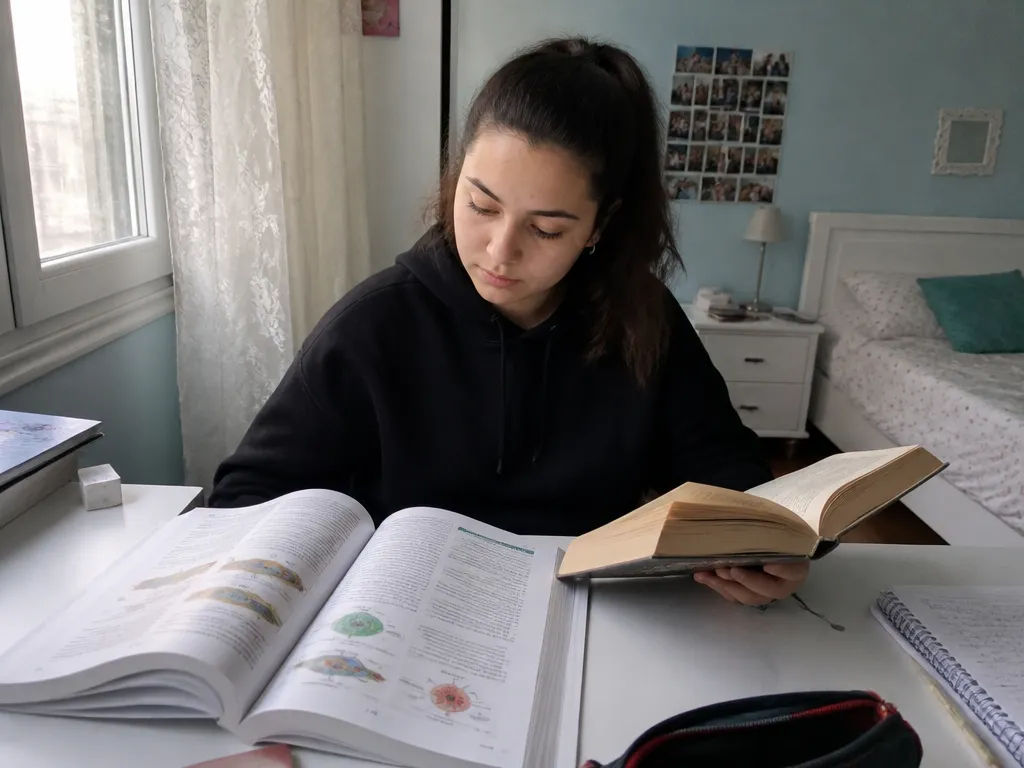
Choosing high school subjects can feel like choosing your whole future at fifteen. In many countries, students pick a science or a literary track. That choice decides which subjects they study in depth and which university majors stay open. The good news is that the choice is rarely final, and a clear method makes it much easier. This guide explains how streams work in several countries, what each one opens or limits, and how to decide with a simple checklist.
Why choosing high school subjects matters for university
Your track shapes three things. First, it sets the subjects you study in depth for two or three years. Second, it often decides which exams you sit or which subjects count in your final grade. Third, universities usually ask for certain subjects for certain majors. For example, medicine and pharmacy normally need biology and chemistry, while engineering needs strong maths and physics. As a result, a track can keep doors open, or close some of them early.
Choosing high school subjects in different countries
Systems differ a lot, and they change, so always check the current rules with your school and your ministry of education.
Türkiye: course choices instead of a formal track
General Anadolu high schools have no formal science or literary track. Instead, students choose elective courses. Under Article 11 of the Secondary Education Institutions Regulation, the school announces the options in December. Students then choose in December and January, with the knowledge of their parents, class teacher and guidance teacher. After that, the choices go into e-Okul. An elective opens only when at least 10 students ask for it. The familiar “sayısal, EA, sözel, dil” groups come from these electives. Vocational high schools, by contrast, place students in a field (alan) in Grade 9. In the end, however, the AYT tests you sit decide your score types, so read our guide to YKS score types before you choose.
Saudi Arabia: the tracks system
In Saudi Arabia, secondary school starts with a common first year in which all students take both scientific and humanities subjects. After that, students follow the general track or one of four specialised tracks: computer science and engineering, health and life, business administration, or the Sharia track. The Ministry of Education’s page also describes a bridging mechanism that lets students switch tracks.
Egypt: two systems side by side
Egypt still runs Thanaweya Amma, with a science stream built on biology, a science stream built on mathematics, and a literary stream. In addition, an optional Egyptian Baccalaureate began in 2025/26, with four pathways: medicine and life sciences, engineering and computer science, business, and arts and humanities. These details come from press reports rather than an official ministry page. So confirm the current rules, and the faculties each path leads to, with your school.
Morocco and Algeria
In Morocco and Algeria, students usually start upper secondary school with a common core in sciences or in letters. They then move into specialised streams that lead to the baccalaureate, such as experimental sciences, mathematics, economics, or letters and languages. Stream names change over time, so check with your school and the Moroccan or Algerian ministry.
What each track usually opens and limits
Details vary, but a general pattern appears in many systems:
- Science tracks usually keep medicine, engineering, computing and the sciences open. In many systems, they also allow business, economics and some social science majors.
- Literary tracks usually lead to law, languages, media, social sciences and the humanities, but they often close medicine and engineering.
- Specialised tracks, such as business or computing paths, suit students who already know their direction.
Maths is often the key subject. Many majors outside science, such as economics, business and psychology, also use it. Dropping maths early can therefore close more doors than you expect.
A checklist for choosing high school subjects
- Name three majors you might want. A rough idea is enough at this stage.
- Check their entry rules. Find out which subjects or exams those majors need in the countries where you may apply.
- Look honestly at your grades. Notice which subjects you do well in and which ones you enjoy.
- Keep doors open if you are unsure. When in doubt, the option with more maths and science usually leaves more choices.
- Ask how switching works. Learn whether you can change track or electives later, and until when.
- Talk to people who know you. Your guidance counselor, teachers and family often see things you miss.
- Ignore the wrong reasons. Friends, prestige or a teacher you like this year are weak reasons for a three-year choice.
When you are choosing high school subjects without a clear direction, start with your interests. Our guide to career assessment for high school students can help, and our university majors list shows where each field leads.
If you choose the wrong track
A wrong choice is rarely the end of the road. In Saudi Arabia, the bridging mechanism lets students move between tracks. In Türkiye, students may change an elective course in the next grade, and the AYT tests you prepare for matter more than any label. Later on, some students change direction at university, and our guide to changing majors explains how that works. Still, choosing well now is easier than switching later.
How ILEAP helps with choosing high school subjects
In ILEAP partner schools, one-to-one counseling gives each student time to look closely at their own options. That includes the track or electives that fit their goals. Before that, career coaching sessions and the 200-question assessment bring out strengths, interests and values. Field experts and alumni then show what different careers really involve, so the decision rests on real information. See how career guidance works.
Frequently asked questions
Is the science track better than the literary track?
Neither is better in general. The science track often keeps more majors open, but the literary track suits students who want law, languages, media or the humanities. The right track fits your goals and strengths.
When should I start choosing high school subjects?
Ideally in Grade 9, before the main choice. That gives you time to explore majors, check entry rules and talk with your counselor and family.
Can I study medicine after a literary track?
Usually not directly, because medical faculties normally ask for biology and chemistry. In Türkiye, medicine uses the SAY score type. So you need to prepare for the AYT maths and science tests, whatever your electives are.
More guides

Health Majors Beyond Medicine: Nursing, Physio, Lab Science and More
Love biology but unsure about medicine? These health majors lead to patient care, lab work and public health, each with its own…

Changing Your Major: When It Makes Sense and How to Do It
Picked the wrong major? Here are the warning signs, your four main options and what each one costs, plus the key transfer…
How to Choose the Right University Major: A Step-by-Step Guide
A practical, six-step guide for high school students who want to choose a university major with confidence.