
Changing Your Major: When It Makes Sense and How to Do It
Picked the wrong major? Here are the warning signs, your four main options and what each one costs, plus the key transfer rules in Türkiye and France.
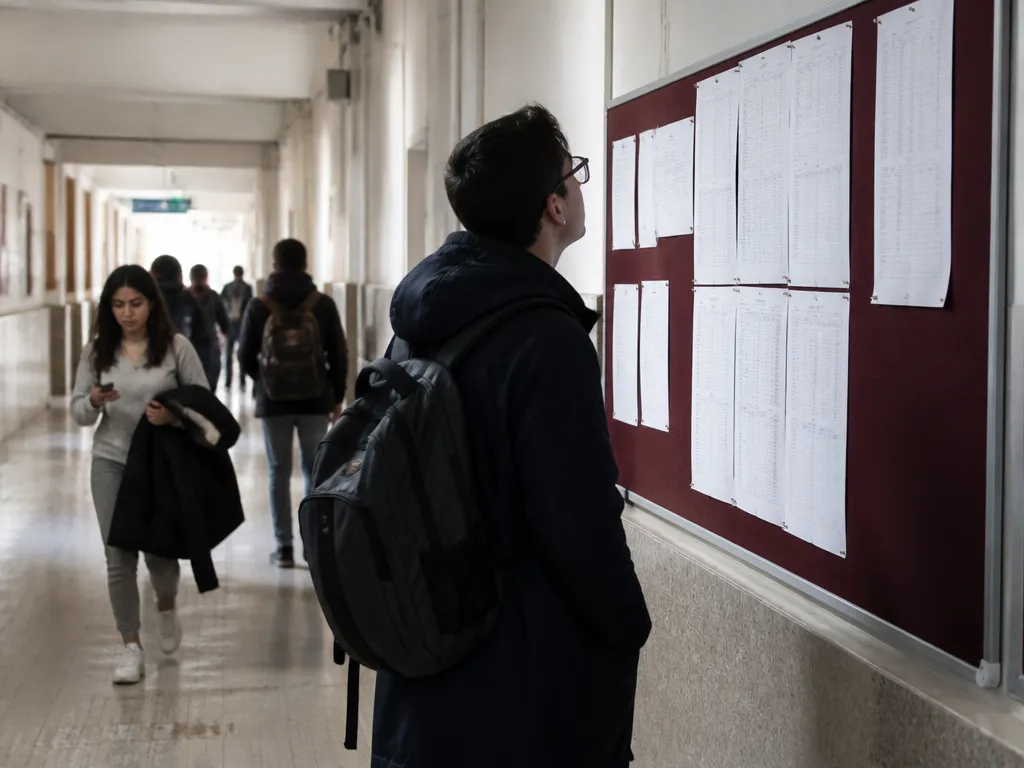
Changing majors can feel like admitting failure, but it is often a sensible correction. Many students discover in their first year that a field is not what they expected. The real question is not whether you may change, but whether a change will solve the problem and what it will cost. This guide covers the warning signs, your main options and their costs, and the key rules in Türkiye and France.
Signs that changing majors might make sense
- You dread almost every course, not just one hard subject.
- You chose the major for someone else, such as your family or friends.
- After talking to people in the field, the careers it leads to do not appeal to you.
- Your grades keep falling even though you work hard.
- Another subject keeps pulling you, and you read about it in your free time.
One sign alone is not enough. However, when several appear together and last for months, it is time to look at your options seriously.
Before changing majors, find the real cause
Sometimes the problem is not the field. A tough first year, a heavy maths course, a new city, homesickness or a teaching style you dislike can all feel like the wrong major. So talk to your academic advisor, older students and a counselor first. Then read the second- and third-year courses of your programme, because they often look very different from the first year. If the field itself is still the problem, move on to the options below. To compare possible new fields, use our university majors list and our guide on how to choose the right university major.
Your options and what each one costs
Stay and add a minor or double major
This is the smallest change, because you keep your progress and add a second field. In Türkiye, the national rules ask for a GPA of at least 70/100 and a place in the top 20% of your class for a double major (çift anadal). A minor (yan dal) needs at least 65/100 and gives a certificate, not a diploma. The main cost is a heavier workload.
Switch programmes inside your university
An internal transfer keeps you at the same university and in the same city. However, quotas keep places scarce, and some of your credits may not count in the new programme, so you may need extra time.
Transfer to another university
A transfer between universities usually works only between equivalent programmes. It therefore suits a change of university more than a change of field. Expect an application, a quota and extra paperwork.
Start again with a new entrance exam
This is the biggest step, but sometimes the only way into a very different field. In Türkiye, it means retaking YKS. You may stay enrolled while you prepare, but you cannot hold two formal bachelor’s places at once. Also, if ÖSYM placed you in a programme the year before, it halves your OBP points. Our guide on how to retake YKS explains the rules and gives a study plan.
Changing majors in Türkiye: the yatay geçiş rules
YÖK’s transfer regulation sets the national framework for yatay geçiş (horizontal transfer):
- Timing: under the general rules, bachelor’s students cannot transfer in their first two or last two semesters.
- Within your university: quotas cover the 2nd to 5th semesters. Your entry score in the target score type must not fall below the lowest base score of equivalent programmes elsewhere.
- To another university: you need a GPA of at least 60/100, or an entry score at or above the target programme’s base score. Bachelor’s quotas and calendars come out in July.
- By entry score: a separate route (Ek Madde 1) lets you apply when your placement score from your entry year reaches the target programme’s base score.
The 28 February 2026 amendment tightened several points. Moving from open or distance education to a formal programme now needs a GPA of 90/100 instead of 80, or a placement score at the target’s base score. Transfers into foreign-language programmes need proof of your language level when you apply, and nobody can transfer into a lower class. In addition, students from programmes abroad without attendance can no longer move into formal programmes in Türkiye. Each university also adds its own rules, so read the target university’s directive (yönerge) and YÖK’s quota announcement.
Changing majors in France: the Parcoursup route
In France, students who want to change course usually apply again through Parcoursup and start a new first year the next September. The official Parcoursup 2027 calendar runs registration and up to 10 choices from 18 January to 11 March 2027. You then complete your file by 1 April, and the main admission phase runs from 1 June to 10 July. Many universities also allow a change after the first semester, but it is not a right and you must apply for it. Your university’s orientation service can help you plan.
A simple plan for changing majors
- Write down the problem. Be specific about what is wrong and what you want instead.
- Talk to an advisor. Ask about options, credits and deadlines at your university.
- Read the target programme. Check its courses, language, entry conditions and quota.
- Count the costs. Include extra semesters, fees, scholarships and, if you study abroad, your residence permit.
- Set a decision date. Transfer windows are short, so decide before the calendar closes.
- Tell your family early. Their support makes the change easier, especially when it affects money or time.
How ILEAP helps
The easiest change of major is the one you never need. In ILEAP partner schools, students explore careers before they choose, through career coaching, a 200-question assessment and meetings with field experts and alumni. One-to-one counseling then helps each student compare options with their family. See how career guidance works. If you are in Türkiye and plan to retake YKS for a new field, ILEAP Academy, one of the first Arabic centers in Istanbul specialised in YKS, starts with a level test and prepares students in three Istanbul centers and online.
Frequently asked questions
Is changing majors a sign of failure?
No. It often shows that you learned something important about yourself. What matters is a clear reason and a plan.
Will I lose time by changing majors?
Often some. It depends on how many of your courses the new programme accepts and on the transfer rules. A minor or an internal switch usually costs less time than a new entrance exam.
When is the best time to change?
As early as the rules allow, once you are sure the field is the problem. In Türkiye, most transfers are not possible in your first two semesters, so plan ahead and watch the July calendar.
More guides

Health Majors Beyond Medicine: Nursing, Physio, Lab Science and More
Love biology but unsure about medicine? These health majors lead to patient care, lab work and public health, each with its own…
How to Choose the Right University Major: A Step-by-Step Guide
A practical, six-step guide for high school students who want to choose a university major with confidence.

Computer Science, Computer Engineering or Software Engineering?
CS, computer engineering, software engineering, IT, data science, AI and cybersecurity sound alike. Here is how they typically differ in courses, maths…