
Student Visa Requirements: Documents, Proof of Funds and the Interview
A clear guide to the student visa: the documents most embassies ask for, how much money you must show in the UK, Germany and France in 2026, and how to prepare for the interview.
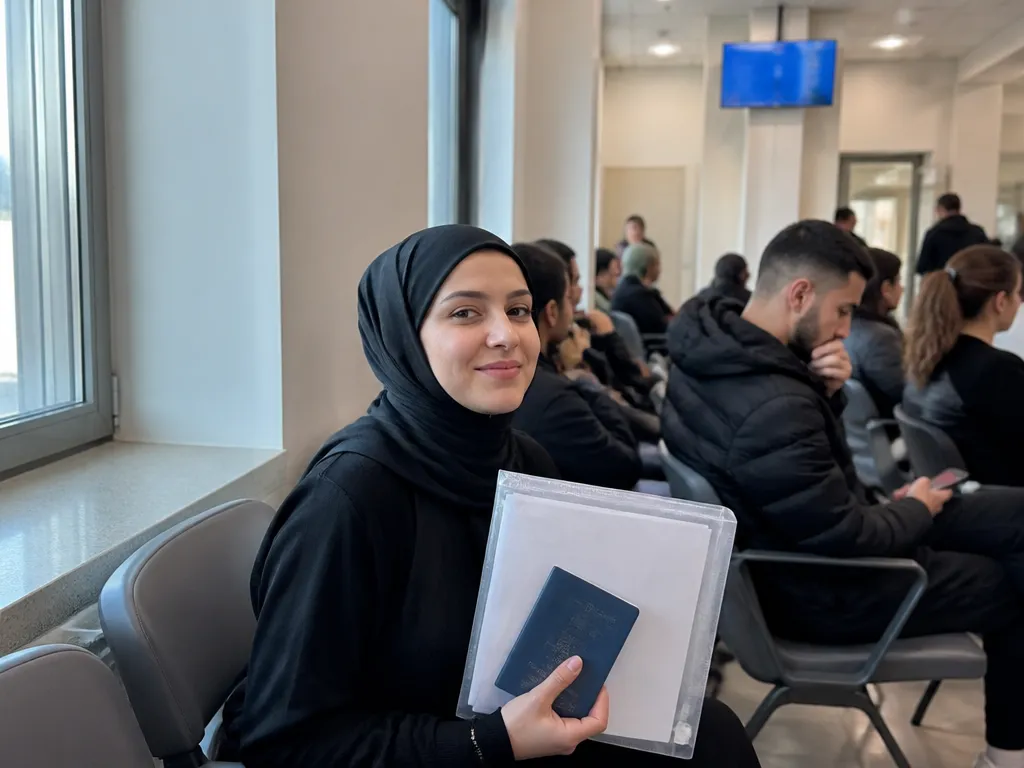
A student visa is often the last step between an offer letter and your first day on campus. It is also the step where small mistakes cause long delays. Each country sets its own rules, but most embassies check the same things: who you are, where you will study and how you will pay. This guide explains the usual documents, the 2026 proof of funds rules in the UK, Germany and France, and the interview. We checked the figures on official pages in October 2026; always confirm them with your embassy.
How a student visa works
For a full degree abroad, you usually need a long-stay national visa, not a tourist visa. You apply once you have an admission letter, at the embassy or visa centre for your place of residence. Here are three examples:
- The UK Student visa needs an unconditional offer and a CAS number from your university.
- Germany’s study visa is a national (D) visa, not a Schengen short-stay visa. You can apply online through the Consular Services Portal.
- France issues a long-stay visa that also works as a residence permit (VLS-TS), for four months to one year. In the 72 countries of the Études en France procedure, including Türkiye, Egypt, Morocco and Algeria, you apply through that procedure.
Student visa documents most embassies ask for
Lists differ by country and even by embassy. However, these items appear again and again:
- A valid passport.
- Your admission or pre-enrolment letter (in the UK, your CAS).
- School certificates, legalised and translated.
- Proof of funds.
- Health insurance.
- A language certificate.
- Photos.
- A CV and a motivation letter, for some embassies.
Some embassies also ask for proof of address or accommodation. In the UK, you may need a TB test result if you have lived in a listed country such as Algeria, Iraq or Morocco. You also need parental consent if you are under 18. On the other hand, the German embassy in Amman says you do not need a hotel or flight booking. So download the checklist of your own embassy, and follow it exactly.
Proof of funds: three examples for 2026
Proof of funds shows that you can pay your fees and living costs, and each country sets its own rules.
UK Student visa: the 28-day rule
You must show your first year’s course fees plus living costs of £1,529 a month in London, or £1,171 a month outside London, for up to nine months. That is £13,761 in London or £10,539 elsewhere, on top of the fees. In addition, you must hold the money for at least 28 days in a row, ending within 31 days of your application. Citizens of some countries, such as Bahrain, Kuwait, Oman, Qatar, Tunisia and the UAE, usually do not need this evidence, but UKVI may still ask. Türkiye, Egypt, Saudi Arabia, Jordan, Iraq and Morocco are not on that list. The visa fee is £558. See GOV.UK: money you need.
Germany: the blocked account
Most students prove funds with a blocked account (Sperrkonto) of €992 a month, or €11,904 for one year, in 2026. Open it before you apply, because embassies accept only the bank’s official confirmation. A formal commitment from a sponsor living in Germany, or a scholarship, can also count. The amount follows the German student grant (BAföG) rate, and a planned reform may raise it in 2027. Check your embassy’s page before you transfer money. The visa fee is €75, and processing takes about four to six weeks in Amman, for example. Our guide to studying in Germany covers the other steps.
France: €877.50 a month
Since 1 August 2026, France asks students to show at least €877.50 a month, up from €615. Over twelve months, that comes to about €10,530. After you arrive, you validate your VLS-TS online within three months and pay €100. The visa fee itself varies, so check France-Visas and the official service-public.fr page.
The student visa interview
Not every application includes an interview. Still, some embassies and visa centres invite applicants, so be ready either way. The officer wants to see a genuine student with a clear plan. Expect questions like these:
- Why did you choose this course and this university?
- Why this country, and not your own?
- Who pays your fees and living costs?
- What will you do after you graduate?
- How does the course connect with what you studied before?
Answer briefly and honestly, and make sure every answer matches your documents. Practise aloud in the language of the interview, but do not memorise a script. Also bring copies of your key papers, in order.
Common reasons for refusal
Many refusals come from small, avoidable problems rather than from the student’s profile. Watch out for these:
- Missing, untranslated or unlegalised documents.
- Funds held for too short a time, or bank papers without the required details.
- Answers that do not match the study plan.
- A course that does not fit your past studies, with no clear reason.
- Applying too late, close to the start date.
If you are refused, read the letter carefully, because it usually gives the reason. Fix that point before you apply again, and ask the university’s international office for help.
A simple student visa timeline
- As soon as you have an offer, download your embassy’s checklist and book an appointment if needed.
- In the UK, you can apply up to six months before the course starts, and a decision usually takes three weeks from outside the UK.
- For Germany, open the blocked account first, then apply early, because processing takes about four to six weeks.
- In France, follow the Études en France steps during pre-enrolment, then validate your VLS-TS after you arrive.
For the full journey, see our study abroad after high school checklist. Also read what a conditional offer means before you count on a CAS, and use our family budget plan to see how proof of funds fits into the total cost.
How ILEAP helps with your documents
On the iLEAP platform, students compare universities, plan costs and organise their applications and documents in one profile. In ILEAP partner schools, university awareness sessions also explain grades, language tests, documents, deadlines and costs before students apply. Explore the iLEAP platform or see how university decisions work.
Frequently asked questions
Can I work on a student visa?
Usually, within limits. In the UK, full-time degree students at a compliant university may work up to 20 hours a week in term time. Germany allows 140 full working days a year, and France allows up to 964 hours a year.
Is a student visa the same as a Schengen visa?
No. Germany and France issue national long-stay visas for study, while a Schengen visa covers only short stays.
When should I apply for my student visa?
As soon as your admission letter and funds are ready. The UK lets you apply up to six months before your course, and German processing takes about four to six weeks.
More guides

Fully Funded Scholarships for Undergraduate Students: Where to Look and How to Apply
Several governments offer fully funded scholarships to school leavers. Here is who can apply, what each award covers, when the calls usually…

Cheapest Countries to Study Abroad (and the Real Total Cost)
Low tuition is only one line of the bill. This guide compares official tuition rules in eight European countries and shows how…

Study Abroad After High School: A Step-by-Step Checklist
A step-by-step checklist for students in Türkiye who want to study abroad: choosing a country, tests, documents, applications and visas.