
Jobs AI Cannot Replace: Skills That Keep You Employable
No job is fully safe from AI, but most will change rather than disappear. Learn to judge careers by their tasks, not their titles, and build skills that last.
Search for jobs AI cannot replace and you will find confident lists of “safe” careers. However, the research is more careful. Studies by the International Labour Organization (ILO) and the World Economic Forum (WEF) suggest that AI mostly changes tasks inside jobs. It is less likely to wipe out whole occupations. So the better question is not which job is safe. Instead, ask which parts of a job stay human, and whether you can get good at them. This guide explains what the evidence says, how to judge a career task by task, and which skills keep you employable.
What the research says about jobs AI cannot replace
Three recent studies give a balanced picture. None of them predicts the end of work, but all of them expect big changes in how people work.
ILO, 2025: exposure is common, replacement is not
In May 2025, the ILO published a refined global index of how exposed each occupation is to generative AI. First, it found that about one in four workers worldwide (24%) are in an occupation with some exposure. However, only 3.3% of global employment falls into the highest exposure category. Exposure also rises with income, from about 11% of employment in low-income countries to 34% in high-income countries.
Most importantly, the ILO notes that most occupations consist of tasks that still need human input. So it sees the transformation of jobs, not mass replacement, as the most likely impact. Clerical jobs, such as data entry clerks, typists, bookkeeping clerks and administrative secretaries, remain the most exposed. You can read the summary on the ILO website.
OECD, 2023: automation risk is broader than AI
The OECD Employment Outlook 2023 estimated that occupations at the highest risk of automation make up about 27% of employment across OECD countries. Still, that figure covers all automation technologies, not AI alone. The same report found that three in five workers worry about losing their job to AI within ten years.
WEF, 2025: the split of tasks is shifting
In the WEF Future of Jobs Report 2025, employers said that humans mainly carry out 47% of work tasks today, technology 22%, and a combination of both 30%. By 2030, they expect the three to be roughly even, at about a third each. At the same time, two-thirds of employers plan to hire people with specific AI skills, while 40% expect to cut staff where AI can automate tasks.
Think in tasks: how to spot jobs AI cannot replace
None of these studies calls any job completely safe. Lists of jobs AI cannot replace often ignore this point. Instead, a more useful approach is to break a job into its daily tasks. For example, an accountant enters data, checks figures, explains results to clients and advises on decisions. AI tools already help with the first two, but the last two depend on trust and judgement.
Try this with any career on your list:
- Write down eight to ten tasks people in that job do in a normal week.
- Mark the routine tasks with information: typing, sorting, copying, simple reports.
- Circle the human tasks: caring, persuading, deciding, repairing, teaching.
- Ask a professional which tasks have already changed in the last few years.
When most tasks fall into the routine group, expect the job to change a lot. When most are human tasks, the core of the job is strong, although the tools around it will still change.
Four kinds of jobs AI cannot replace easily
The jobs AI cannot replace easily share a few features. Several of them also appear among the WEF’s growing jobs, such as nursing, social work, personal care, teaching and the skilled trades.
Care and human contact
Nurses, social workers, counsellors and personal care aides build trust with people at difficult moments. AI tools can support them with records or reminders, but the relationship itself stays human.
Hands-on work in real places
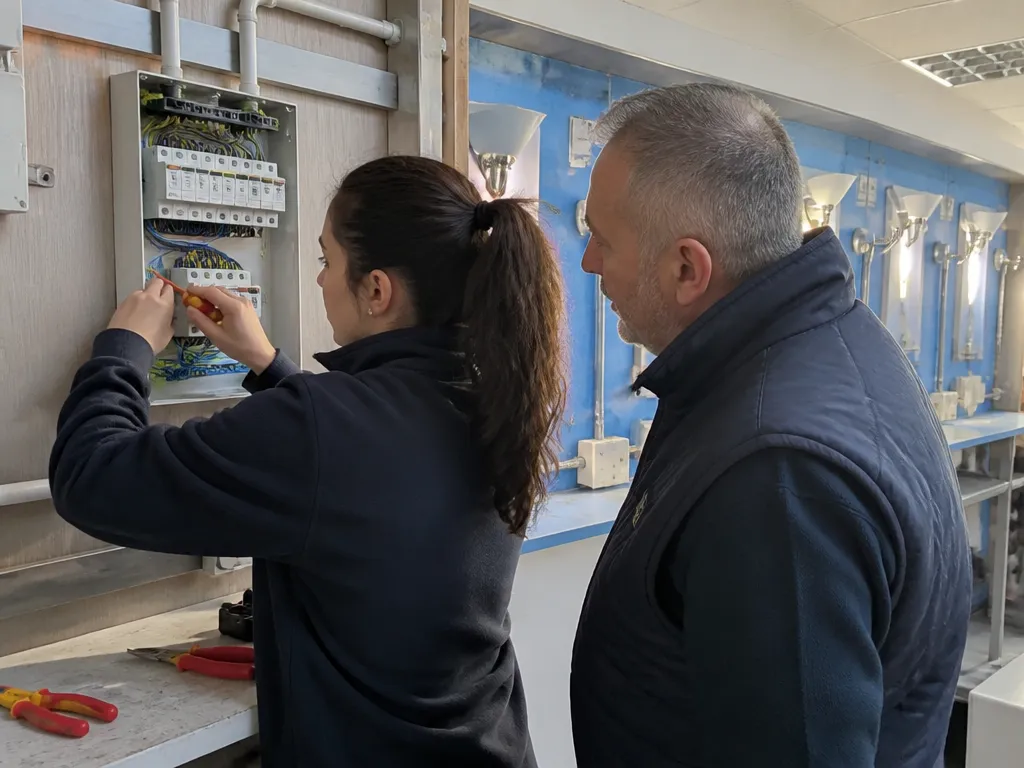
Electricians, plumbers, technicians and builders work in places that change every day: old buildings, broken machines, tight spaces. This kind of practical problem solving still depends on skilled hands. Many of these trades also need vocational training rather than a university degree.
Judgement and responsibility
Doctors, engineers, managers and judges make decisions with serious consequences. AI can prepare information for them, but someone still has to take responsibility for the final decision.
Teaching, leading and persuading
Teachers, project managers and team leaders help people learn, agree and act. So these tasks rely on empathy, communication and social influence, which employers in the WEF survey rank among their core skills.
The rise of “AI + X” roles
Many future jobs combine a field you love with the ability to use AI well. Think of a nurse who reads health data, a designer who tests ideas quickly with AI tools, or a lawyer who checks AI-drafted documents with care. In many fields, the jobs AI cannot replace belong to people who use AI well. Because two-thirds of employers plan to hire people with AI skills, using these tools responsibly helps in almost any career. AI and machine learning specialists are also among the fastest-growing roles, so technical AI careers grow too. For more on these growing fields, see our guide to jobs of the future.
Skills for jobs AI cannot replace
Skills last longer than job titles. These are worth building in high school:
- Analytical thinking: checking facts, comparing options and spotting errors, including the errors of AI tools.
- Communication: explaining ideas clearly in writing and in person.
- Empathy and active listening: understanding what other people need.
- Technological literacy: using digital and AI tools with care and good judgement.
- Practical skills: fixing, building or making things with your hands, for example in a workshop.
- Curiosity and lifelong learning: picking up new tools as they appear.
For the full list and ways to practise each skill, read our guide to skills for the future.
How ILEAP helps you prepare for jobs AI cannot replace
In ILEAP partner schools, career coaching sessions help students understand their strengths and interests. Meetings with experts from different fields let students ask professionals how AI is changing their daily work. Then one-to-one counseling helps each student turn what they learn into a realistic plan. Explore the ILEAP program or see what career guidance includes.
Frequently asked questions
Are there jobs AI cannot replace at all?
None of the studies in this guide calls any job completely safe. However, roles built on care, hands-on work, judgement and dealing with people keep a strong human core, and several of them are growing.
Will AI take my future job?
According to the ILO’s 2025 research, most jobs are more likely to change than to disappear. Your job may look different from today’s version, so the ability to keep learning matters as much as your first choice.
Should I still study computer science?
Yes, if it interests you. In fact, software developers and AI specialists are among the fastest-growing roles in the WEF report. To check whether the field fits you, start with our guide on what career is right for me and a career assessment.
More guides
Careers in Demand Now and How to Check the Job Market
Which jobs are hard to fill today, and how can you check demand in your own country? Official labour data from three…
Nothing Interests Me: How to Find a Career Direction Anyway
Feeling that nothing interests you is common, and you can work through it. Small experiments, an energy log and real conversations help…

Career Assessment for High School Students: How It Works and How to Use the Results
What a career assessment measures, how to read your results and how to turn them into a clear plan for your future.